


TL;DR
- A SPIFF (also spelled SPIF) is a short-term sales incentive tied to a specific achievement or target, separate from regular sales commission.
- Common SPIFF rewards include cash, gift cards, prepaid cards, merchandise, experiences, and general recognition.
- Bulk digital gift cards work particularly well for SPIFFs because they're desirable and easy to redeem, available in different values, and easy to distribute to individuals or larger teams.
If you've ever managed a sales team, you've probably found yourself looking for fresh SPIFF incentive ideas.
Whether you're launching a new product, encouraging account upgrades, or trying to book more qualified demos, a well-chosen incentive can give your team something specific to work toward.
Of course, choosing what earns a reward is only part of the decision. You also need a way to easily deliver it when promised.
In this guide, we'll explore SPIFF incentive ideas you can adapt for your team, compare reward options, and walk you through what to look for when choosing a platform to send them.
What is a SPIFF incentive, and how is it different from commission?
A SPIF (Sales Performance Incentive Fund) rewards sales employees for completing a specific action or reaching a defined target, separate from their normal commission structure. Both SPIF and SPIFF are commonly used spellings.
Regular commission is often part of a salesperson's ongoing compensation arrangement, such as a percentage of revenue or a fixed payment per sale.
But a SPIFF, meanwhile, applies only to a particular business priority for a limited time. So think of it as supplementing regular compensation, not replacing it.
For example, a software company might offer an additional $100 for each qualifying sale of a newly launched product during a two-week campaign. Employees still earn their usual commissions, but they can pile SPIF rewards on top for meeting special campaign criteria. Quick launch, quick sales, quick rewards—that's the idea.
It's also that limited time element that distinguishes SPIFs from broader sales incentive programs, which may reward sustained performance over months or an entire year.
When do companies use sales SPIFF incentives?
Lots of companies use SPIFFs for lots of different reasons. Common examples include:
- New product launches: Encourage sales of a recently introduced product, service, or subscription
- Clearing inventory: Reward sales of older stock, seasonal products, or designated inventory
- Short-term targets: Offer additional incentives for reaching weekly, monthly, or quarterly goals
- Booking demos: Reward completed appointments that meet defined qualification criteria
- New customer acquisition: Encourage salespeople to secure new logos or convert qualified prospects
- Upselling and cross-selling: Reward upgrades, account expansion, or sales of complementary products
- Sales contests: Recognize top performers or teams that reach a shared target
Whatever the objective, choose an outcome that employees can actually influence, and then define what counts as a successful outcome.
Your SPIFF should be something attainable, motivating, and beneficial for you and them.
SPIFF incentive ideas and examples for sales teams
The right SPIFF structure depends on your sales goals, team, and budget.
| SPIFF structure | Example | Best for |
|---|---|---|
| Flat-rate SPIFF | $25 per qualified demo completed | Encouraging specific activities |
| Product-specific SPIFF | $100 per sale of a new product | Launches and inventory priorities |
| Tiered SPIFF | $50 for three sales, $100 for five, or $300 for ten | Increasing sales volume |
| Upsell or cross-sell SPIFF | $75 per qualifying account upgrade | Customer expansion |
| Individual contest | $1,000 for the top qualifying performer | Short-term competition |
| Team-based SPIFF | $50 per employee if the team reaches its target | Collaboration and shared goals |
Here’s how a few of these ideas could look in practice. Adjust the amounts to fit your budget and the value of the achievement.
- A two-week demo incentive: Offer a $25 full-choice gift card for each completed demo with a prospect who meets your qualification criteria. Specify what makes a prospect eligible and confirm that the meeting took place before approving the reward.
- A product launch incentive: Offer $100 for each qualifying sale of a new product during its launch month. Define when the sale counts, such as when the contract is signed or the first payment clears, and explain how two reps sharing a sale would divide the reward.
- A monthly sales milestone challenge: Offer $50 for three qualifying sales, $100 for five, or $300 for ten completed during the month. Pay the highest tier each rep reaches, so someone who closes ten qualifying sales earns $300 in total. This gives employees another milestone to work toward after their first few wins.
- An account upgrade incentive: Offer $75 for each existing customer who moves to an eligible higher-tier subscription during a four-week campaign. Specify which upgrades qualify and approve the reward once the upgraded plan is active and the first payment has cleared. This keeps the incentive tied to confirmed account growth.
- An individual new-customer contest: Offer a $1,000 travel gift card reward to the rep who closes the most qualifying new-customer sales during the month. Run the contest among reps with comparable territories and sales opportunities, and decide how you’ll handle a tie before it starts. Set a minimum qualifying result so the prize recognizes a meaningful achievement.
- A monthly team target: Offer each member of a 10-person team a $50 reward if they collectively complete 20 qualifying account upgrades during the month. That gives you a $500 reward budget if the team reaches its goal, before any applicable fees or other costs. Everyone works toward the same target and shares in the reward.
Before choosing an individual contest, consider how territory size, lead quality, and existing accounts could affect who wins. Individual improvement targets or a shared team goal may give more employees a realistic opportunity to earn a reward.
And put the terms in writing before the campaign starts. Include who’s eligible, the start and end dates, qualifying actions, reward amounts, payout limits, and when employees can expect their rewards.
Also explain how you’ll handle cancellations and whom employees should contact if they disagree with a result. Settling those details upfront makes it easier to verify achievements and deliver the rewards you’ve promised.
What rewards can you offer for a sales SPIFF?
No one knows your team better than you, so you're in the best position to determine the right SPIFF incentive for them. Having plenty of options at your disposal can increase your ability to motivate them.
Ultimately, the right reward depends on what your employees value, the achievement you're recognizing, and how you'll deliver it.
Whichever reward you choose, coordinate with finance or payroll on how you’ll record and report it.
And note that in the U.S., employee gift cards are generally taxable wages, so include those payouts in your payroll planning (and always check your local regulations when it comes to taxing employee rewards).
Cash bonuses and commission accelerators
It's hard to argue with cold, hard cash. An extra $100 or a temporary boost in commission is easy to understand, and your sales reps can spend the money however they like.
That said, be aware that cash SPIFFs can present more issues than you'd expect, especially for smaller, short-term incentives:
-
They typically involve payroll coordination, tax withholding, and potentially waiting until the next pay run.
-
And when that bonus finally lands in someone's regular paycheck, it can easily blend into their usual earnings rather than feeling like a special reward for a job well done.
💡Yes, cash still makes sense for larger incentives or businesses with established commission structures.
But for smaller, more frequent rewards, it's worth weighing gift cards vs. cash, particularly when you want to recognize an achievement while it's still fresh.
Retail and recipient-choice gift cards
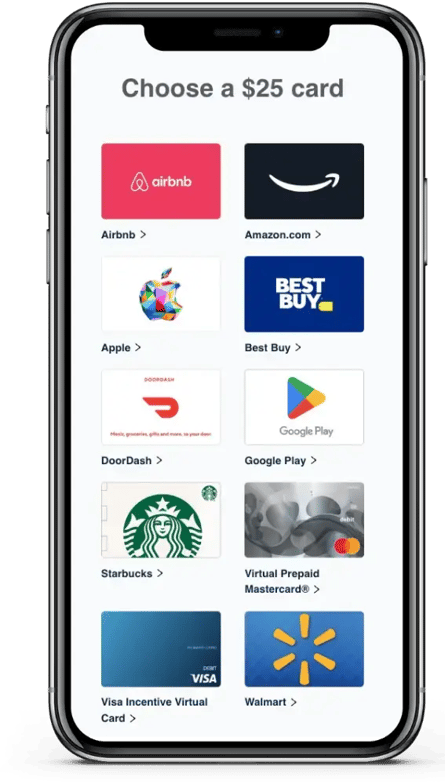
Retail gift cards let employees spend rewards with a specific merchant (so, you can only spend a Starbucks gift card at Starbucks, etc). If you go this route, look for a gift card platform that lets employees choose from a catalog of rewards available in their country.
And if you go this route, you're not alone:
A 2024 Fiserv/Javelin survey of U.S. incentive buyers shows how businesses use cards for SPIF rewards:
- 79% offered general-purpose prepaid cards.
- 70% offered retail or brand-specific gift cards.
It's easy to see the appeal. Digital gift cards in particular can be sent once an achievement is verified and the reward is approved, giving employees a separate reward delivery to mark the accomplishment. That'll make the recognition feel more immediate and distinct from their regular compensation.
Plus, with recipient choice, even a smaller SPIFF can feel more personal.
Prepaid Visa® and Mastercard® cards
Digital prepaid Visa and Mastercard cards give SPIFF recipients more freedom over how they spend their rewards. Unlike retailer-specific gift cards, they can be used at a wide range of businesses that accept the card's payment network, making them a flexible, cash-like incentive.
For example, Giftbit's Visa incentive card options and USD Virtual Prepaid Mastercard let eligible sales reps put their rewards toward something they actually want, whether that's everyday expenses, dinner out, or a treat for themselves. Digital options also make it easy to reward a sales win quickly, without having to wait to arrange a cash payment.
Merchandise and experiences
Electronics, travel, event tickets, and restaurant experiences can also make appealing rewards for larger achievements or sales contests.
You could also give employees gift cards to put toward these experiences. For example, a gift card for Airbnb, Carnival Cruise Lines, or Best Western lets them plan a trip on their own schedule, while something like a Texas Roadhouse gift card gives them the chance to enjoy a meal out.
This can be a more practical option than arranging experiences yourself, particularly for distributed teams. Physical merchandise involves purchasing, shipping, and inventory management, while pre-booked experiences can create scheduling and accessibility challenges. Gift cards give recipients more flexibility in how and when they use their reward.
Recognition and non-monetary rewards
Public recognition, team celebrations, professional development opportunities, or additional time off where permitted can be a nice complement to monetary rewards.
These options can reinforce team culture, though recognition shouldn't replace compensation employees have already been promised. Pizza parties are fun, but spending power talks.
How to choose a platform for SPIFF rewards
You don’t necessarily need a platform built specifically for SPIFFs to incorporate them into your plans. If you already use a CRM or another system to confirm sales achievements and calculate rewards, a gift card platform (like Giftbit) can help you deliver the approved payouts through the tools you already have.
Digital SPIFF delivery is particularly useful when you’re rewarding frequent achievements or employees in different locations. You can send rewards without buying, storing, and shipping physical cards.
Ultimately, your sales records will tell you what each person earned, but you'll also want to know whether their reward was sent and claimed. Look for a platform that makes it easy to keep track of those details.
Here are more best practices for managing your SPIFFs:
- Send rewards in the quantities you need. You might reward one rep after a verified sale or send different amounts to an entire team at the end of a campaign. Check for individual sends, spreadsheet uploads, scheduling, and ways to automate delivery after results are approved.
- Match the catalog to your team and budget. Check that the available denominations fit your incentive amounts and that employees can choose rewards they want. For international teams, confirm the options available in each recipient’s country, including currency and redemption restrictions.
- Follow through on delivery. Look for delivery and claim reporting that helps you spot failed sends and follow up with employees who haven’t collected their rewards. Check any claim deadlines and what happens to eligible unclaimed value so you understand both the recipient experience and the budget implications.
- Give recipients somewhere to get help. Direct recipient support can save your sales managers from troubleshooting missing emails, redemption problems, or prepaid card questions. Find out what support is available before choosing a provider.
- Check costs and spending controls. Compare platform fees, funding charges, and any costs attached to particular rewards or integrations. If several managers will send incentives, check the available permissions and budget controls.
After the campaign, use your sales data to compare qualifying results with a relevant baseline, such as a comparable previous period, and review reward and administrative costs. Delivery and claim records help you reconcile those payouts and identify employees who still need a follow-up.
Make your next sales SPIFF easier to reward and manage
The right SPIFF gives employees a clear opportunity to earn something they value. Once you’ve chosen the incentive and confirmed who qualifies, Giftbit can help you send digital rewards and track their delivery and claim status.
Ready to put your SPIFF incentive ideas into action with Giftbit? Create a free Giftbit account to get started, or book time with our team to discuss reward delivery for your sales team.
Motivate your sales team with digital SPIFF incentives
Check out the Giftbit Overview to learn how you can easily send and track rewards, or create a free account to start sending today.

Send SPIFFs automatically 🚀
Giftbit delivers digital rewards to your sales reps when they've earned them.


